Industrial Pain Points & Strategic Challenges
The automotive industry faces critical bottlenecks that traditional automation fails to solve.
Precision Gaps & Thermal Drift
High-performance components (EV gearsets, rotors) require micrometer precision. Conventional CNC and welding systems suffer from thermal expansion and tool wear, leading to high scrap rates and rework.
Data Silos & Latency
Modern sensors generate GB/s of data, but legacy shop-floor IT cannot process this in real-time. This latency prevents closed-loop interventions, making "Autonomous Production" a marketing term rather than a reality.
Rigid Automation Protocols
Traditional robots follow fixed G-code paths. In a volatile supply chain, the inability to adapt to material variations (viscosity, hardness, reflectivity) results in downtime and inefficient resource consumption.

Autonomous Welding: Orchestrating Precision
In modern automotive manufacturing, the paradigm has shifted to autonomous welding as an adaptive system. Malgukke provides the digital backbone required to process massive data streams in milliseconds.
| Aspect | Traditional Welding | Malgukke Style |
|---|---|---|
| Precision | Fixture dependent | Adaptive correction (µm range) |
| Scrap Rate | Post-process detection | Immediate stop or real-time correction |
| Data Depth | Spot-check inspections | 100% digital documentation per weld point |

CNC Orchestration: Micrometer Precision
Shifting CNC logic from static G-code to adaptive environments. Our systems compensate for thermal expansion and tool wear in real-time to meet exascale requirements.
| Aspect | Traditional CNC | Malgukke Style |
|---|---|---|
| Precision | Static offsets | Dynamic real-time µm compensation |
| Uptime | Scheduled stops | Predictive intervention; zero downtime |
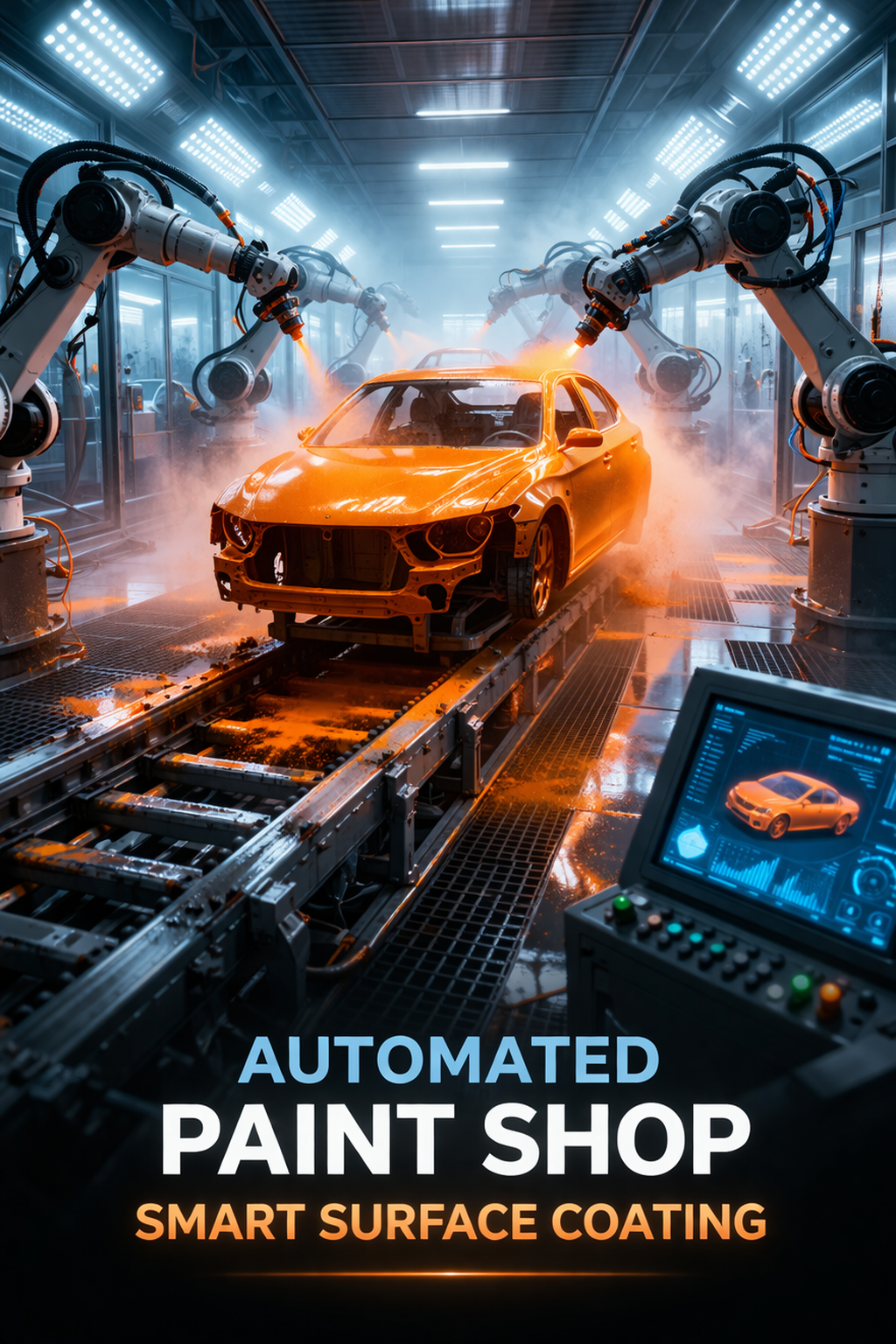
Smart Coating: Fluid Intelligence
Transforming the paint shop into a software-defined environment. AI-Clusters simulate fluid dynamics to optimize spray paths based on humidity and viscosity.
| Aspect | Traditional Shop | Malgukke Style |
|---|---|---|
| Efficiency | Fixed spray patterns | Geometry-specific AI-optimized paths |
| Sustainability | High chemical waste | Up to 30% reduction in resources |

Digital Twin QA: Instant Validation
Immediate verification of parts against CAD virtual models. Lustre GPFS fabrics enable high-speed comparison to detect structural anomalies in seconds.
| Aspect | Traditional QA | Malgukke Style |
|---|---|---|
| Speed | Batch sampling audit | 100% part inspection in real-time |
| Recall Risk | High (batch-based) | Near-zero (individual validation) |