E-Mobility Pain Points & Strategic Challenges
Overcoming the chemical and infrastructure limits of current electrification.
Energy Density Bottlenecks
Current range limits are dictated by chemistry. Relying on trial-and-error laboratory testing for new solid-state or high-nickel cathodes slows innovation and delays cost-parity with ICE vehicles.
Grid Congestion & V2X Latency
Mass EV adoption threatens local power grids. Without low-latency orchestration fabrics, "smart charging" remains passive, failing to utilize vehicles as decentralized energy storage buffers (Vehicle-to-Grid).
Thermal Runaway & Degradation
Extreme fast-charging induces thermal stress. Predicting molecular-level degradation and preventing thermal runaway requires real-time Digital Twin synchronization to maintain long-term asset value.
The Paradigm of Sustainable Power
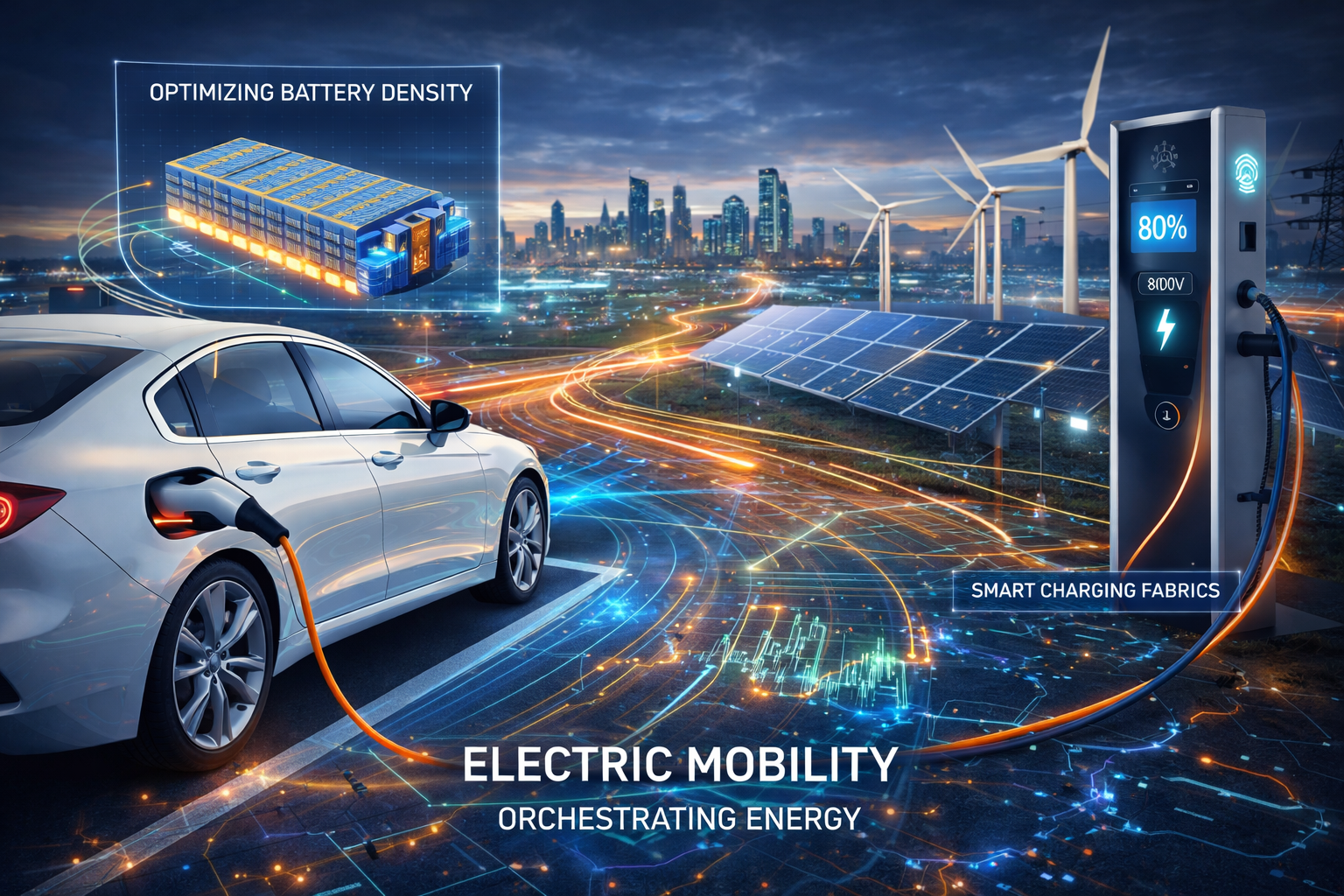
Transitioning to a full electric fleet requires a dual-track computational strategy: maximizing chemical energy density while orchestrating charging loads across the urban grid. By utilizing high-performance molecular simulations, we identify stable anode/cathode configurations that offer up to 30% higher range.
| Aspect | Traditional EV Approach | Orchestrated Mobility |
|---|---|---|
| Battery Yield | Physical lab testing | Virtual molecular pre-validation |
| Charging | Passive electricity draw | Active V2G (Vehicle-to-Grid) balancing |
| Cycle Life | Estimated degradation | Digital Twin predictive health sync |
The Computational Density of Materials Science
Simulating a single battery charge cycle at the molecular level generates petabytes of transient data. High-speed storage fabrics and parallel HPC clusters are critical to ensure that researchers can iterate on new chemistries in days rather than years. This virtual-first approach is the primary driver for achieving price parity between internal combustion engines and electric drivetrains, while ensuring grid-scale resilience through AI-orchestrated infrastructure.